The problem
Some disposable medical devices cannot be safely cleaned and reused, yet the devices and their supporting equipment create a strong economic incentive to try. The customer wanted the host equipment to reject a disposable device after a small, predetermined number of connector insertions.
Conventional electronic counters were a poor fit because the device had to tolerate sterilization processes that could damage semiconductor memory. The available space was extremely limited, and the solution needed to integrate into connector products already moving through established assembly and cleaning processes.
The system concept
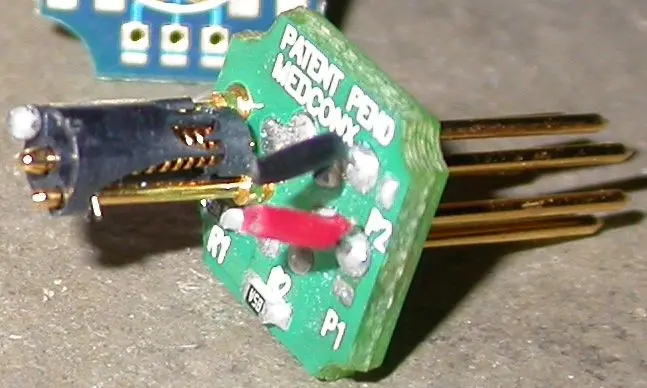
The host equipment already measured an identification value to determine which disposable device had been connected. The solution was therefore mechanical in state but electrical at the interface: each insertion advanced a spring through a molded indexing track. After the allowed number of cycles, the mechanism changed the identification circuit to an invalid value, causing the host to reject the device.
Constraints drove the design
- Variable connector engagement The mechanism had to trigger with very shallow engagement while surviving the full tolerance range of several mating connector systems.
- Sterilization compatibility Materials and operation had to remain compatible with radiation and chemical sterilization rather than rely on vulnerable electronics.
- Miniature features Small mechanical elements still had to retain enough strength, resolution, and repeatability to mold and assemble reliably.
- Existing manufacturing Installation, soldering, and cleaning needed to fit an established connector platform without creating an expensive new process.
Design and manufacture
The body was injection molded from glass-filled liquid-crystal polymer, selected for fine feature reproduction, thermal resistance, dimensional stability, low moisture absorption, and compatibility with the required sterilization environment. A gold-plated beryllium-copper spring provided both bias and indexed electrical contact.
Assembly remained intentionally simple: insert the spring, install the plunger, wind and trim the spring, place the completed mechanism over carrier pins, and retain it during the connector’s existing soldering operation. The retaining method was chosen through testing, not appearance, and avoided adding a separate adhesive or cleaning process.
Outcome
The final design met its functional and manufacturing objectives, was adopted across multiple related product lines, and became the basis for a family of issued patents. More importantly, it solved the entire problem: sensing a physical use, retaining state through sterilization, communicating that state through an existing electrical interface, and remaining economical to manufacture.
Why it still belongs in this portfolio
The technologies are different from my current software work, but the systems problem is familiar: understand the real operating environment, identify the existing interface that can carry authority, design for failure and variation, and make the result buildable by someone other than its inventor.